 |
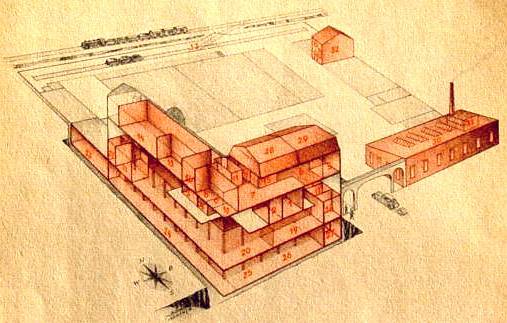
Bungartz-Werk in der Vorkriegszeit:
1. Betriebsführer
2. Sekretariat
3. Betriebsleitung
4. Werbebüro
5. Chefkonstrukteur
6. Konstruktionsbüro
7. Kaufmännisches Büro
8. Buchhaltung
9. Bürovorstand
10. Exportabteilung
11. Besprechungszimmer
12. Kalkulation
13. Anmeldung
14. Gefolgschaftsraum
15. Küche
16. Waschraum und WC
17. Betriebsingenieur, dahinter
Werkmeisterbüro
18. Pförtner
19. Versuchsabteilung,
Lehrlingswerkstätte,
dahinter Motorenmontage
|
20. Montagewerkstätten,
Getriebe-, Frässchwanz-
und Fertigmontage
21. Lackiererei
22. Spritzraum
23. Lager für Rohguß- und
Schmiedestücke, dahinter
Ersatzteillager
24. Ersatzteillager (Fertigteile)
25. Grobschlosserei,
dahinter Schmiede
26. Schweißerei, dahinter
Heizung und Kochraum
27. Transformatorenraum, dahinter
Luftschutz- und Sanitätsraum
28. Raum für Modelle
29. Raum für Versuchsgeräte
30. Werkzeugmaschinenhalle
31. Härterei
32. Prüfstand
33. Anschlußgleis |
 Nach der Gründung der Firma Bungartz & Co. im Jahre 1934 beschäftigte man sich neben dem Bau von Personenwagen-Anhängern auch mit dem Bau von Bodenfräsen nach den Konstruktionen des Ingenieurs Josef Fey. Das Foto zeigt der Fey-Gobiet-Fräse Type "Schatzgräber", Motor 5 PS, gebaut ab 1927. Im Gegensatz zu der Siemens-Fräsen mit federnden Haken hatte der Fey Hauenmesser an der Fräswelle, die unter Federdruck auf Schlupf gestellt wurden. Neben dem Vorteil von eingebautem Differentialgetriebe, bewährte sich diese Konstruktion auch besser in der Forstwirtschaft. Durch den Verkauf dieser Fey-Bodenfräsen kam die Firma Bungartz in Konkurrenz mit der Firma Siemens & Halske, die schon seit vielen Jahren Bodenfräsen gebaut hatte. Der Elektrokonzern Siemens & Halske konnte die Fabrikation aus internen Gründen nicht mehr richtig weiterführen, und so kam nach einigen Verhandlungen einmal das Seltsame zustande, daß der Kleine den Großen aufkaufte. Die Firma Bungartz & Co. übernahm im August 1935 die Fabrikation der schon bestehenden Siemens-Bodenfräse K5. Bungartz ging die Verpflichtung ein, für den Ersatzteildienst der gelieferten Siemens-Fräsen zu sorgen, und übernahm auch die Siemens-Spezialvertretungen als Stützpunkte. Als leitender Ingenieur wurde Obing. Schmidt von der Siemens-Schuckert-Werke übergenommen. Der Konstrukteur Josef Fey löste daraufhin die Verträge mit Bungartz, später wurden diese und auch neuere Fey-Typen weiter gebaut von der Maschinenfabrik Meyer-Brackwede.
Ersten eigenen Modellen
 Bungartz baute nun zuerst die Fabrikationsmöglichkeiten für die Siemens-Bodenfräse weiter aus und fügte im Jahre 1937 dieser ersten Type die Bungartz L3 mit 4,5 PS DKW-Motor hinzu, die die Nachfolgerin der früher von Siemens eingeführten SIMAR-Maschinen C2 und C3 sein sollte. In den folgenden Jahren verbesserte man die Bungartz-Bodenfräse K5 Bauart Siemens (verstärktes Getriebe, Triebradkupplungen, stärkere Motor) und ebenso die L3 (2000 Stück geliefert), bis sich aus diesen Maschinen schließlich die Typen 6 PS F70 und 4,5 PS F40 entwickelten. Als neue Maschine brachte man die stärkere F90 mit 8,5 PS DKW-Motor heraus. Da sich neben der Bodenbearbeitung mit Fräsen infolge des zunehmenden Arbeitermangels in den Gartenbaubetrieben das Bedürfnis nach einer motorischen Hacke herausstellte, entwickelte Bungartz für dieses neue Arbeitsgebiet die Motorhacke H2 und ihre Nachfolgerin, die Motorhacke H3.
 Von Anbeginn an legte Bungartz großen Wert darauf, die Konstruktions- und Versuchsabteilung der Firma möglichst großzügig auszubauen, um ihre Maschinen stets als die modernsten und besten der Kundschaft anbieten zu können. Ihre Entwicklungsarbeit führte dabei nicht nur zu den neuen Typen, sondern sie brachte auch eine Reihe von Zusatzgeräten, wie Pflüge, Zughacken usw., heraus. Weiterhin war es das Bestreben, nicht nur zu verkaufen, sondern die Kunden auch zu beraten. Die Zahlreichen Stützpunkte im In- und Ausland haben diesen Kundendienst immer in mustergültiger Weise gepflegt. Allein die allmählich bedeutend gewachsene Kundenzahl und die durch die Kriegsverhältnisse bedingten Reiseschwierigkeiten ließen es geboten erscheinen, von Zeit zu Zeit direkt von der Fabrik aus mit den Kunden in Verbindung zu treten. Ab 1941 übernahm der "Bungartz-Fräsendienst" im Format DIN-A5 diese Aufgabe (Bild zeigt erste Ausgabe vom 1. März 1941, 24 Seiten). Er berichtete über fabrikatorische Neuerungen, erteilte Ratschläge für die Praxis, ließ aber auch gern Stimmen aus der Praxis zu Wort kommen.
Im Herbst 1939 beschreibt Herr Johannes Sembdner, Bungartz-Händler aus Germering bei München, seine Erfahrungen mit u. A. dem Bungartz L3: Über 30 Maschinen in wenige Tagen verkauft und von mir eingeführt! Dabei sind 3 Kunden, die die zweite Bungartzfräse, Bauart Siemens erhielten!
Kein Wunder, wenn Sie in Betracht ziehen, daß über 20 % der heutigen Produktion der Fa. Bungartz & Co., München, exportiert werden. Dies, obgleich in den verschiedensten Ländern heute Bodenfräsen fabriziert werden und deutsche Erzeugnisse in vielen Staaten jedoch nur sehr schwer abzusetzen sind infolge der maßlosen Hetze, die getrieben wird. Fabrikate, die derartige Exportziffern auszuweisen haben, trotz großer in- und ausländischer Konkurrenz, müssen qualitativ hervorragend sein!
100 % von den insgesamt ausgeführten Fräsen aus Deutschland sind laut letzter Statistik allein von der Fa. Bungartz & Co., München, geliefert worden! Dies beweist besser als jedes Gutachten (von denen ich aber doch einige der Letzten Zeit folgen lasse) die Güte der von mir vertriebenen Maschinen. Nur das Beste kann sich heute auf dem Exportmarkt behaupten und das Beste ist gerade gut genug für meine Gärtnerkunden! Bungartzfräsen beherrschen den Markt. Vom gesamten deutschen Export an Fräsen und Kleintraktoren hat Bungartz 1938 allein 84 % und 1939 bisher sogar 94,5 % bestritten! Vom gesamten Absatz in Deutschland lieferte wertmäßig Bungartz allein 80,2 %!
Kriegszeiten
 Obwohl mir von nationalsozialistischen Sympathien bei Bungartz absolut nichts bekannt ist, war man in 1941 schon stolz auf dem Beitrag von den Bungartz-Fräsen an der deutschen Wirtschaft. Gemüse und Obst nahmen in der Kriegszeit in der Verpflegung des Volkes einen immer breiteren Platz ein, naturgemäß musste demgegenüber der Gartenbau viel höhere Leistungen vollbringen. Trotz der fehlenden Menschen- und Gespannkräfte konnte der Erwerbsgartenbau vor allen Dingen durch den Einsatz von Bodenbearbeitungsmaschinen großartige Leistungen vollbringen. Viele Betrieben hätten ohne Fräse überhaupt nicht mehr auskommen können, wie viele damaligen Besitzer am Bungartz-Stützpunkt bestätigten. "Tausende Bungartz-Fräsen werden so zum Wohle ihres Besitzers und des ganzen deutschen Volkes eine segensreiche Arbeit in der Ernährungssicherung leisten. Bungartz ist führend in Deutschland und ebenso im Export. So kommt deutsche Wertarbeit im Ausland durch ihren Erlös an Devisen und wichtigen Importgütern auch wieder der deutschen Wirtschaft zugute."
Dass der Verkauf während des Krieges nicht stillstand, zeigen die Verkaufsziffern von Bungartz-Fräsen:
| bis 1940 | 5000 |
| bis 1942 | 10.000 |
| bis 1945 | 35.000 |
Während des Zweiten Weltkrieg hatte das Bungartz-Werk in München schwer zu leiden an dem Bombenschäden. Diese Fotos zeigen den Wiederaufbau in 1944 von den zerstörten Werkshallen:
Mit Hilfe eines kleinen Kreises von Mitarbeitern, jedoch mit einem großen Schatz an Erfahrung, wurde das zerstörte Werk wieder aufgebaut. Bereits 1945 lieferte man schon wieder die ersten Bodenfräsen, die noch inmitten von Schutt und Asche gebaut wurden. Dass die Bungartz-Fräsen nicht geeignet waren für Rüstungszwecke, wirkte sich nach dem Krieg auf die Zuteilung von Bauteilen günstig aus.
1953 hatte Bungartz & Co. schon wieder rund 350 Mitarbeiter. Von 1945 bis 1953 lieferte man 8000 Hackfräsen und 11.500 Einachsschlepper aus, davon war aber 20 % noch durch Zulieferer gefertigt. Gründe für die große Nachfrage waren die Verarbeitung hochwertigen Materials und die gute Abdichtung gegen Schmutz und Staub.
Die große Einachser
Im Konstruktionsbüro wusste man die Gelegenheit zu nutzen. Man brauchte ein Ersatz für den Großfräse F90, welche nach dem Krieg mit 10,5 PS Ilo-Motor geliefert wurde. Diese Maschine war eigentlich nur als Fräsmaschine einzusetzen, die Gärtner wollten aber verschiedene Arbeiten mit ihrer Maschine machen können. Bei dem gegen Ende der vierziger Jahre auf den Markt gebrachten Einachsschlepper Bungartz U1 stammte vom 11 PS Bungartz Petroleummotor über das Getriebe bis hin zum Mähwerk nahezu alles aus dem Hause Bungartz. Die Maschine war aber auch mit 10,5 PS Ilo Benzin- oder Petroleummotor, und mit 14 PS Stihl Dieselmotor zu haben. Die Maschine war sehr vielseitig: die lieferbaren Zusatzgeräte ermöglichten dem Gärtner, mit dem U1 25 verschiedene landwirtschaftlichen Arbeiten auszuführen, und ersetzten hierdurch 15 andere Maschinen.
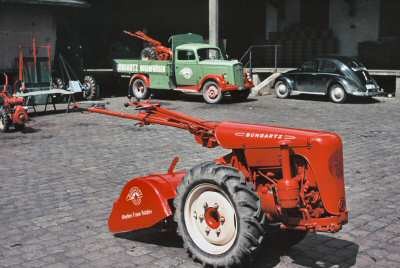
Als Nachfolger der U1 wurde ab 1953 der Bungartz L5 geliefert, am Anfang mit dem gleichen Bungartz- oder Stihl-Motor wie bei dem U1. Sehr Erfolgreich wurde der L5 aber durch den Anbau von 10 oder 12 PS Sachs Zweitakt-Dieselmotoren (durch Max Holder entwickelt), und den 13 PS Hatz Viertakt-Dieselmotor. Der L5 war mit mehr Gängen ausgerüstet als der U1, dabei hatte er auch im Gegensatz zum Vorgänger serienmäßig ein blockierbares Differential im Getriebe. Die gute Qualität des Bungartz L5 dürfte schon daraus ersichtlich sein, daß er bis 1969 im Lieferprogramm blieb!
In Zusammenarbeit mit der Firma Hummel, Heitersheim, entwickelte man einen Anhänger, dessen Achse über Zapfwelle vom Einachsschlepper aus angetrieben wurde. Dieser war so zum vierradgetriebenen Fahrzeug geworden, mit dem Vorteil, daß die Nutzlast des Anhängers zur Bodenhaftung beitrug.
Auch die eigenen Bungartz-Anhänger blieben natürlich im Programm. Personenwagen-Anhänger fertigte Bungartz mindestens noch bis zum Krieg, die Einachsschlepper- und Traktorenanhänger wurden bis Ende der sechziger Jahre weiterentwickelt und in vielen Varianten angeboten.
Die kleine Einachser
Als Ersatz für die Motorhacke H2 kam man 1940 mit der Bungartz H3 auf dem Markt. Diese war anfangs mit Sachs-Benzinmotoren von 2 oder 3 PS ausgestattet, nach der Krieg aber mit 4 PS TWN-Motoren (Triumph Werke Nürnberg). Von der H3 alleine wurden bis 1945 5000 Stück angefertigt, in 1954 waren es 8000 geworden. Dann wurde sie durch die H3N mit 4 PS Sachs-Motor ersetzt.
Aus der mittelschweren Einachs-Bodenfräse F40 waren inzwischen die Bungartz F55 und FR geworden, wobei die letzte 2 Vor- und 2 Rückwärtsgänge sowie optionale Triebradkupplungen hatte. Beide waren mit 6 PS TWN-Motor lieferbar, die FR auch mit 6 PS Ilo Zweitakt- oder Universal Viertakt-Motor. Der Universal-Motor wurde bezogen von der Firma Alfred Berning in Schwelm (Westfalen), die diese Benzinmotoren in Lizenz von der schweizerische Firma Universal fertigte.
Auch in diesem Marktsegment wollten die Gärtner mehr Einsatzmöglichkeiten haben. In 1953 wurde daher die Bungartz H4 eingeführt, eine Maschine mit 4 Vor- und 2 Rückwärtsgänge. Es schienen unglaublich viele Möglichkeiten, in der relativ schmalen Getriebegehäuse eingebaut zu sein. Der Verwendung des patentierten Bungartz-Schnellverschlußes ermöglichte das leichte Wechseln der vielen lieferbaren Anbaugeräten. Der Motor war einen 5 PS Benziner, zuerst von TWN (H4 Baureihe 1), später von Fichtel & Sachs (H4 Baureihen 2, 3 und 4). Die H4 hatte eine ganze Reihe von Nachfolgern, wobei immer mehr Möglichkeiten in der fast gleichförmig bleibenden Getriebe versteckt wurden:
FRN (Baureihe 4) in 1955 und 1956, 6 - 7,5 PS Sachs Benzinmotor, 4 Vor- und 2 Rückwärtsgänge.
H5 (Baureihe 5) von 1957 bis 1959, diese Maschine war die billige Ausführung des FRN, mit nur 5 PS-Motor.
FRK und FRNK (Baureihe 5), gebaut von 1957 bis 1959, 6 Vor- und 2 Rückwärtsgänge, Benzin- oder Dieselmotor.
FRNK (Baureihen 6 und 7), 1959 bis 1961, mit eingebautem blockierbarem Differential, Benzin- oder Dieselmotor.
H5 (Baureihen 6 und 7), 1959 bis 1961, 7,5 PS Sachs Benzinmotor, Getriebe ohne Differential und Untersetzungsstufe (also 3+1 Gange).
Der Bungartz FRNK hatte sich hierdurch inzwischen natürlich zu einem Mittelschweren Einachser entwickelt.
Mittelschwere Einachser
Als bei dem Bungartz FK (Baureihe 8) dann ab 1961 auch noch ein Gangunabhängige Zapfwellenschaltung dazu kommen musste, war man verpflichtet endlich ein völlig neues Getriebe zu entwickeln. Dieses mechanisch sehr feingebautes Getriebe hatte 4 Vor- und 3 Rückwärtsgänge, sowie auch volldifferential und beidseitige Triebradkupplungen, später sogar noch ergänzt mit Lenkbremsen. Der FK war lieferbar mit zweitakt oder Viertakt-Benzin- oder Dieselmotor von 8 bis 10 PS. Die best gelungenen Ausführung war wohl diese mit dem 8 PS Berning Viertakt-Dieselmotor, gebaut von Alfred Berning in Schwelm.
Offensichtlich beurteilte ein Teil der Kundschaft den Bungartz FK als zu kompliziert, und damit zu teuer. Daher stellte man 1963 den Bungartz H6 vor, auf dem Markt gebracht unter dem Bezeichnung Bungartz F6. Diese Maschine hatte wieder ein komplett neues Getriebe, diesmal stark vereinfacht und mit Kegelradantrieb anstatt der Schneckenwellen der Vorgänger. Diese Maschine war ausgestattet mit drei Vor- und einem Rückwärtsgang, und nur auf einem Rad wirkende Lenkkupplung. Die Gänge waren perfekt abgestuft für Fräs-, Pflug- sowie Transportarbeiten. Für Transportzwecke konnte zusätzlich zu der Getriebebremse Handhebelbediente Bandbremsen angebaut werden, die auf beide Radnaben wirkten. Der F6 konnte wieder mit einer Reihe verschiedener Motoren nach den Wünschen des Käufers geliefert werden. So gab es ihn mit Sachs Zweitakter, aber auch mit dem 9 PS starken BMW Industriemotor Type 403 (eine Sonderausführung des BMW-Isetta-Motors). Am meisten sieht man den F6 aber mit der 7 PS Viertakt-Dieselmotor E79 von der Firma Hatz, Ruhstorf. Für die Qualität des F6 spricht wohl, dass er fast 30 Jahre neu lieferbar blieb, und noch heute sehr gefragt sei.
Vierradschlepper
Den Einstieg in die Zweiachsschlepperfertigung unternahm Bungartz 1953 mit der von Herrn Koppmair entwickelten Versuchstraktoren T1 und T2. Auf der Kölner DLG-Ausstellung präsentierte das Werk den Frästraktor Bungartz T3, eine Weiterentwicklung von dem Einachser U1. Der T3 war Wahlweise mit eigenem 11 PS Benzin/Petroleummotor oder 14 PS Stihl Dieselmotor zu haben. Schmale Bauart, 6-Gang-Getriebe und ein interessantes Geräteprogramm standen zur Verfügung. Ganz besonders an der T3 waren die bei große Lenkradausschlag automatisch eingreifende Lenkbremsen.
Erfolgreicher als der T3 wurde der 1956/57 entwickelte 12 bis 13 PS starke Bungartz T5, diesmal auf der Basis von der Einachser L5. Bedauerlicherweise kam er genau zu dem Zeitpunkt heraus, als sich auf dem Markt für Landwirtschaftliche Zugmaschinen eine drastische Schrumpfung abzeichnete. Sicher, als "Jedermann-Traktor" war der T5 ohnehin nicht konzipiert, eher schon als Spezialfahrzeug für Intensiv- und Reihenkulturen sowie für Pflegearbeiten. Dem Großflächigen Gartenbau, wichtiger Abnehmer der Münchener Einachsschlepper, blieb Bungartz also auch mit seinen Traktoren eng verbunden. Entsprechend gestaltet war die Technik: Schmale Bauweise, Hangfestigkeit, Motorhydraulik, gut abgestuftes Getriebe und große Wendigkeit beim kleinsten Wenderadius, ergänzt um die verschiedensten Anbaugeräte wie Fräse, Spritzpumpe oder auch Presslufthammer; sie zeigten, daß sich Bungartz mit dem T5 schon etwas Besonderes hatte einfallen lassen. Hervorzuheben ist die patentierte 90-Grad-Lenkung. Sie machte, unterstützt durch große Einzelradbremsen, einen fast rechtwinkligen Einschlag möglich.
Neues Bungartz-Werk
 Der Schwerpunkt der Entwicklung der Firma Bungartz & Co. lag bei rotierenden Bodenbearbeitungswerkzeugen. Diese Werkzeuge waren überall dort am Platze, wo humusreiche Böden bei Intensivkulturen vorhanden sind, also vornehmlich im Gartenbau. Darüber hinaus war diese Art der Bodenbearbeitung in der Forstwirtschaft, im Obstbau und im Weinbau vorherrschend. Besondere Bedeutung hat die Bodenbearbeitung mit rotierendem Werkzeug in heißen Gegenden, d. h. also im Mittelmeerraum, in Süd-Afrika und Süd- und Mittel-Amerika. Bei den dort auftretenden Bodenzuständen ist eine Bodenbearbeitung überhaupt nur mit rotierenden Werkzeugen besonders robuster Konstruktion möglich. Die Firma Bungartz & Co. hatte deshalb anfangs 1958 einen Export-Anteil von über 40 %. Sie beherrschte mit Ihren Schleppern und den Spezial-Zusatzgeräten für rotierende Werkzeuge den Mittelmeerraum, wie überhaupt diese Maschinen in über 60 Ländern der Erde verkauft wurden.
Die Ausweitung des Geschäftes erforderte die Errichtung neuer Fabrikationsräume, deren Einweihung Anfang 1958 vorgenommen wurde. In der Neumarkter Straße wurde eine ganz moderne Fabrik mit einem entsprechenden Verwaltungsgebäude, Ausstellungs-, Kundendienst- und Lagerräumen errichtet. Die Fabrik beschäftigte zurzeit über 320 Arbeiter, Angestellte und Lehrlinge. Die Firma Bungartz & Co. hatte gegen 1958 über 36.000 Schlepper der verschiedensten Art und Größe hergestellt. Da zunächst Siemens-Fräsen gebaut wurden, kann man auch in den Erfahrungsschatz der Firma Bungartz & Co., die bei der Fabrikation der Firma Siemens & Halske gewonnenen Erfahrungen dazurechnen, so daß die Firma Bungartz & Co. damals auf eine Erfahrung beim Bau von etwa 50.000 Schleppern und Bodenfräsen zurückblicken konnte.
Die Firma Bungartz & Co. selbst hat bis 1958 an Löhnen und Gehältern 14,3 Millionen DM ausgezahlt. Im gleichen Zeitraum wurden an sozialen Leistungen (Arbeitgeberanteil) 2,1 Millionen DM und an Lohnsteuern ebenfalls 2,1 Millionen DM aufgebracht. Demnach sind durch die Firma Bungartz & Co. dem bayerischen Wirtschaftsraum bis 1958 insgesamt 18,5 Millionen DM zugeflossen.
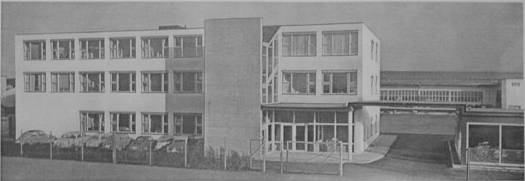

Links: Der Werkseingang im neuen Verwaltungsgebäude.
Rechts: Blick in eine Werkhalle, in der die Fräsen am Fließband hergestellt werden.
Der Wert des Neubaus in der Neumarkter Straße betrug einschließlich der Platzkosten 1,85 Millionen DM. An Maschinen und Einrichtungen wurden im Bau nochmals 1,8 Millionen DM investiert. Die steigenden Umsätze in der Einachsschlepperindustrie (gegenüber der Ackerschlepperindustrie) und die Ausweitung der Vertriebsorganisation der Firma Bungartz & Co. ließen im Jahre 1957 einen Netto-Umsatz von über 8 Millionen DM erreichen.
Bungartz im Ausland
In den Niederlanden wurden die Bungartz-Einachser importiert von der Firma Dilling & Rokahr in Rotterdam. Nach der Zweiten Weltkrieg übernahm der extra zu diesem Zweck aufgerichtete Firma Agincore NV in Amsterdam / Diemen diese Arbeit. Mit viel Erfolg brachte man die Bungartz-Fräsen und später auch die Traktoren unter den holländischen Gärtnern. Der belgische Importeur war der Firma Edmond Isbeque in Brussel / Schaarbeek. Obwohl Bungartz-Fräsen auch nach Frankreich geliefert wurden, gab man an der Firma Ellecinque einen Fertigungslizenz ab.
In die USA wurden vornehmlich Bungartz Vierradtraktoren geliefert, die meisten vom Type T5. Diese wurden geliefert von dem Allein-Importeur für Canada und der USA, Burton Supply Co., Inc. in Youngstown (Ohio). Man hatte Zweigniederlassungen in Columbus (Ohio), Dunkirk (Ohio), Bedford (Pensylvania) und Harrisburg (Pensylvania).
 Auch mindestens eine der Motorhacken H1 fand ihren Weg in die USA, geliefert von der "Universal Tractor Corp., US representatives for Maschinenfabrik Bungartz, Germany", 50 Broad Street, New York. Außerdem wurden sogar die Bungartz FRN und L5 mit Wisconsin-Motor geliefert!
Wenig erfolgreich blieb ferner das von Bungartz gemeinsam mit dem Motorenfabrikanten Hatz, Ruhstorf, in Brasilien begonnene Unternehmen, über die Firma AGRISA eine Lizenzfertigung des Bungartz-Schleppers T5 aufzunehmen. Einige Bungartz L5 wurden aber gefertigt.
Neuen Produkten
Die aufgestockten Kapazitäten des neuen Bungartz-Werkes nutzte man unten anderem zum Ausbau der Schlepperfertigung. So kam zum bis 13 PS stärker motorisierter T5, der 20 PS leistende Bungartz T6 hinzu. Dieser Traktor mit Zweizylinder MWM-Motor und 6+1-Gang Hurth-Getriebe hatte als Besonderheit eine extra Zapfwelle unter dem Motor, zum direkten Antrieb eines Mähwerk. Der Bungartz T7 mit einem 34 PS VW Industriemotor, später auch mit 20 PS MWM-Motor, ließ ebenfalls nicht lange auf sich warten. Der T7 hatte das gleiche Bungartz-Getriebe als der T5, Unterschied zwischen den Modellen war nur die Motorstärke.
In 1959 präsentierte Bungartz einen Nachfolger der H3N: die Bungartz H1 war die erste Einradhacke aus dem Münchner Werk. Ausgestattet mit einem 2,5, später 4 PS leistender Sachs-Benzinmotor konnte diese Motorhacke bis 1968 in etwa 5500 Stück verkauft werden. Gegen Ende der Produktion war sie auch mit 6 PS Ilo-Motor lieferbar. Durch die Bauweise mit nur einem angetriebenen Rad statt zwei Räder wie bei allen bisherigen Bungartz-Motorhacken, verbesserte man die Einsetzbarkeit der Motorhacke vor allem bei der Unkrautbekämpfung in dem Zwischenreihenarbeit.
Mitte der sechziger Jahre fragten die Gärtner nach kleineren Traktoren. Deshalb entwickelte man eine schmale Ausführung des T5 und T7, Bungartz T5E bzw. T7E genannt, deren größte Breite 73 cm betrug. Angetrieben wurden diese von einen 13 oder 16 PS Hatz-Diesel oder 29 PS VW-Motor. Es ging noch kleiner: der auf dem Einachser F6 basierter Bungartz T4 war ausgestattet mit einen 7 PS Hatz-Dieselmotor, hatte 3 Vorwärts- und 1 Rückwärtsgang. Mit Hilfe einer Handpumpe konnte die hydraulische Hebevorrichtung betätigt werden. Vor allem in den holländischen Gewächshäusern wurde der T4 eingesetzt für Fräs-, Spaten- und Transportarbeiten.
Zusammen weiter
 Schlecht verkauften sich die Bungartz-Traktoren nicht, doch mehr als 300 Neuzulassungen pro Jahr wollten es einfach nicht werden. Zweifellos lag diese Zahl zu niedrig, um für die Rückläufige Fräsenproduktion einen Ausgleich zu ergeben. Da überraschte es zuletzt nur noch Außenstehende, als 1965 bekannt wurde, daß Bungartz weite Teile seiner Münchner Werksanlagen an die in der Stoßdämpferherstellung tätige Boge GmbH verkauft hatte.
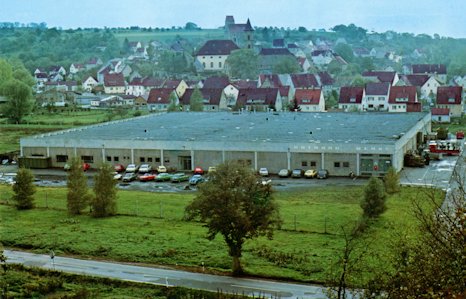 Der dabei erzielte Erlös reichte aus, um auch weiterhin im Traktorengeschäft tätig zu bleiben. Als Partner bot sich die Zweibrückener Baumaschinenfabrik Karl Peschke GmbH und Co. KG an, die mit dem dreirädrigen PEKAZETT-Hangschlepper UF 260 gerade einen technisch interessanten Ausflug in das Gebiet der forstwirtschaftlichen Spezialmaschinen unternahm. Bungartz und Peschke kamen noch 1965 überein, eine gemeinsame Maschinenfabrik zu gründen, die im pfälzischen Hornbach neue Werksanlagen erstellen sollte. Mitte 1966 war es dann soweit. Die gesamte bekannte Bungartz-Produktion, bestehend aus Einachs-Motorhacken, Einachsschlepper sowie Vierrad-Spezialtraktoren mit einer Leistung zwischen 8 und 40 PS, kam in verbesserter Ausführung nun unter dem Firmennamen "Bungartz & Peschke" auf den Markt.
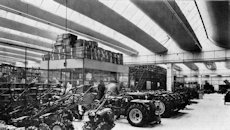
 Moderne Gesichtspunkte der Betriebswirtschaft und Industriearchitektur bestimmten die Konstruktion der großflächigen Hallenbauten für die Produktion der Bungartz-Schlepper auf dem Industriegelände in Hornbach (Pfalz). Alle Fertigungsabteilungen, technische Büros und Betriebsverwaltung waren darin unter einem Dach zusammengefasst. Die Zweckmäßige Ausrichtung und die Erfordernisse des Materialflusses und der Arbeitsabläufe ergab eine funktionale Gliederung in übersichtliche Teilbereiche. Solche Perspektiven zeigen die Bilder aus dem Werk Hornbach. Die Fertigungseinrichtungen und die technischen Entwicklungsmöglichkeiten dort boten zusammen mit Gießerei und Blechverarbeitung des Schwesterwerkes in Zweibrücken eine Leistungsstarke Produktionskapazität, die die Tradition des Namens Bungartz fortsetzte.
In den Regionen mit intensiven Hopfen-, Wein- und Gartenbau erwarben sich Ende der sechziger Jahre die Allrad-Schmalspurschlepper Bungartz T8DA mit einem 30 PS Deutz-Dieselmotor sowie der noch stärkere Bungartz T9HA50 mit einem 50 PS Hatz-Motor etliche Freunde.
Der Bungartz T8DA war basierend auf dem Dexheimer Allrad 222, welche von der Maschinenfabrik Dexheimer GmbH in Wallertheim gebaut wurde. Dexheimer entwickelte den Allrad 222 in 1965. Dexheimer hatte eine Lizenz wo die Vorderachse 8 Grad nach hinten geneigt eingebaut wurde um bei der Allradachse einen größeren Lenkeinschlag zu erzielen. Bungartz baute das genauso ein und es kam zum Konflikt zwischen Bungartz und Dexheimer. Dexheimer verkaufte dann eine Fertigungslizenz an Bungartz. Dexheimer hat bis zum Jahresanfang 2014 noch Gartenbautraktoren gebaut.
Die T8 und T9 verhalfen Bungartz & Peschke 1969 zum besten je erzielten Jahresergebnis mit 459 Neuzulassungen. Doch dann sanken die Verkaufszahlen wieder auf eine wirtschaftlich unbefriedigende Höhe ab.
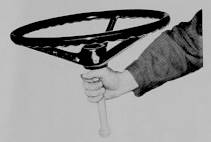 Als die Lösung für alle möglichen Arbeitsaufgaben im kommunalen Bereich bot Bungartz & Peschke ab 1968 den Bungartz Kommutrac an. Für diese Maschine wurde nicht etwas Vorhandenes umgebaut oder angepasst, diese Multifunktionale System-Einheit wurde von Grund auf neugestaltet. Das Fahrzeug wurde konzipiert und Entwickelt für alle Pflegearbeiten in Park- und Sportplatzanlagen und alle Winterdienstarbeiten. Es konnte Heck-, Zwischen- und Frontgeräte von Norm-Anschlüssen aufnehmen und antreiben mittels reichliche Hydraulikausrüstung. Interessant war das Duo-Fahrwerk mit zweifachem Pedalwerk, zweifacher Lenkung und um 180 Grad drehbarer Komfort-Fahrersitz. Das Hurth-Schleppergetriebe hatte 6 Vorwärts- und 6 Rückwärtsgängen, in beiden Fahrtrichtungen reversierbar, der Motor war den 40 PS VW-Industriemotor. Als Extra lieferbar waren Fronthebevorrichtung, Frontzapfwelle, Allradantrieb, Fahrerkabine und Hatz-Dieselmotor. Der Kommutrac blieb bis zum Ende im Lieferprogramm mit viele Spezial-Anbaugeräten. Nach der Übernahme durch Gutbrod wurde die Maschine von dieser Firma weiterentwickelt und als Gutbrod Kommutrac verkauft.
Ende einer Erfolgsgeschichte
 Mit dem Verkauf der Produktionsbereiche Kommunal- und Weinbergschlepper an die Firma Gutbrod, Saarbrücken-Bübingen im Jahre 1974 endete die Ära Bungartz im deutschen Traktorenbau, dem sie weniger von den Stückzahlen an Vierradschlepper her als vielmehr mit ihrem konsequenten Bekenntnis zum Spezialschlepper wichtige Impulse gegeben hat. Die Firma Gutbrod baute die T8, T9 und Kommutrac noch einiger Zeit selber und entwickelte daraus neuere Kleintraktoren. Die Baumaschinenfabrik Karl Peschke GmbH und Co. Kg fabrizierte den Kommutrac auch noch weiter, zudem noch den Einachser F6. Schließlich kaufte 1976 die Firma Gutbrod auch das Hornbach'sche Werk selber, und richtete dort eine moderne Rasenmäherfertigung ein.
Die Firma Bungartz & Co. befand sich in den Händen des Herrn Dr. Everhard Bungartz, der durch geschäftlichen Weitblick im Laufe mehr als eines Vierteljahrhunderts aus einem damals vergleichsweise kleinen Betrieb durch die Erfordernisse der Zeit hindurch eine Firma geschaffen hatte, deren Weltruf auf den geschilderten Gebieten auch von der ausländischen Konkurrenz anerkannt wurde. Im Laufe von 40 Jahre hatte man 30 verschiedene Typen Vierradschlepper entwickelt, dazu noch 50 Typen Motorhacken und Einachsschlepper. Dr. Bungartz verstarb 1984.
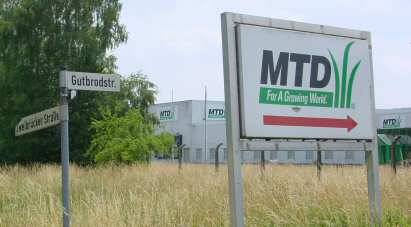 Im Jahre 2003 ist in Hornbach kaum noch etwas von der Firma Bungartz & Peschke zurück zu finden. An der Gutbrodstraße befindet sich noch die Werkshalle, wo Gutbrod- und MTD-Rasenmähern vom Band rollten. MTD nutzt den gesamten Standort seit 2006 als zentrales Ersatzteillager (bis dahin am Stammsitz Saarbrücken beheimatet) für alle Kunden in Europa, Afrika und Russland. Es sind permanent 50 Mitarbeiter am Standort beschäftigt; saisonal sogar bis zu 75. Die zentrale Lage im Herzen Europas ermöglicht es aus Hornbach heraus, alle wichtigen Märkte innerhalb 24-48 Stunden zu beliefern. Darüber hinaus, ist seit dem Jahr 2011 am Standort Hornbach ebenfalls die neue After-Sales Marke ARNOLD als Branchenübergreifender Ersazteilspezialist samt eigenem Konfektionierungscenter voll integriert, siehe www.arnoldproducts.eu oder MTD After-Sales Video mit kompletter Tour durch der Zentrallager.
Die PEKAZETT Krane (PKZ = Peschke Karl Zweibrücken; da das Kürzel PKZ bereits vergeben war, wurde eben PEKAZETT ins Warennamensregister eingetragen) werden noch immer weiter gebaut von KSD Kransysteme GmbH in Zweibrücken.
Holter Maschinenhandel
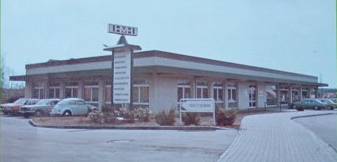 Der gesamten Ersatzteildienst von der Firma Bungartz & Peschke wurde am 1. Juni 1974 angekauft von Herrn Josef Bachmaier, für seinen Holter Maschinenhandel in Schloß Holte-Stukenbrock. Herr Bachmair, in 1926 geboren, wurde in 1941 Kaufmannslehrling bei Bungartz in München. Seit dieser Zeit ist er in ununterbrochener Folge in der eingeschlagenen Maschinensparte tätig: ab 1941 in dem technischen Innendienst, von 1955 bis 1969 im Außendienst. Am 1. Januar 1970 machte er sich selbständig mit der Gründung der Holter Maschinenhandel, und übernahm der Werksvertretung für Bungartz & Peschke sowie im Laufe der Zeit für vielen andere Fabrikanten. Bis 1992 wurden bei der HMH noch Bungartz F6 gefertigt. Noch heute hat man viele Bungartz-Teile im Lager, oder lässt sie sogar nachfertigen.
|

 Everhard Bungartz wurde am 5. Dezember 1900 in Köln geboren. Er heiratete Gretel Asbach aus Rüdesheim, eine Tochter von
  Dr. Bungartz hatte in 1933 eine sehr gute und sichere Stellung bei der I.G. Farbenindustrie, Frankfurt a.M.-Griesheim. In der zweiten Hälfte des Jahres 1933 trat sein damaliger Schwiegervater, Herr Hugo Asbach, an ihm heran mit dem Vorschlag, eine Maschinenfabrikation in München zu gründen, um die damals leerstehenden Räume der Firma Macholl auszunützen. Trotz seiner guten Stellung konnte er den Verlockungen, selbständig zu werden, nicht widerstehen. Er schied am 1. April 1934 aus der I.G. Farbenindustrie aus und eröffnete in München in den langjährigen Geschäftsräumen die Firma Bungartz & Co.
 Den Anstoß zum Vorschlag von Herrn Asbach hat die Neukonstruktion eines kleinen, billigen Zweisitzerwagens gegeben. Diese wurde konstruiert von Josef Ganz, ein im ungarischen Budapest geboren deutscher Ingenieur. Ganz baute Anfangs der 30-er Jahren verschiedene Kleinwagen, wie den Standard (Gutbrod) "Superior", einen Ardie, den Adler "Maikäfer", und den Bungartz "Butz". Nach der Machtergreifung durch den Nationalsozialisten in 1933 wich Ganz um der Judenverfolgung zu entgehen nach Liechtenstein aus. Dort richtete er ein kleines Konstruktionsbüro ein und baute wieder ein Kleinwagen-Prototype, den Motosacoche-getriebene "Erfiag". Ganz baute in 1945 für den schweizerische Firma Rapid Motormäher AG in Zürich ein neuer Kleinwagen mit dem gleichen Namen "Rapid". Josef Ganz arbeitete später für Holden in Australien und verstarb 1967. Der Bungartz "Butz" (siehe Foto) wurde vermutlich nur ein Jahr gebaut, bis Bungartz von der Firma Siemens das Patent für Bodenfräsen einschließlich der Fertigung desselben übernahm. Interessant ist, dass der Ende dreißiger Jahre von Ferdinand Porsche konstruierte, von Adolf Hitler erwünschten Volkswagen viele Merkmale besaß der von Josef Ganz schon gebaute Kleinwagen.

 Neben Personenwagen baute Bungartz & Co. (Fahrzeugbau und Maschinenfabrik, Abteilung Anhänger) dafür auch den passenden Anhängern. Diese wurden hergestellt unter den Namen Butz, mit passendem Emblem, dafür offensichtlich einen Stromlinienanhänger Modell gestanden hat. Das Fahrgestell wurde von Spezialisten, von Automobilkonstrukteuren entworfen und entsprach den neuesten Kenntnissen des Kraftfahrzeugbaues. Zentralrohrrahmen, Radeinzelfederung und vor allen Dingen eine neuartige Radführung gaben dem Fahrzeug eine Straßenlage, die durch kein anderes Fabrikat übertroffen wurde. Sie konnten nicht schwänzeln oder schleudern.
 Nach dem Wünsch der Kunden konnte auf dem Fahrgestell eine Reihe von verschiedenen Aufbauten geliefert worden, siehe die
  Bungartz & Co. lieferte in der Zusammenarbeit mit Sport-Berger-Werk in Rotschwaige-Dachau (Oberbayern), sogar einen Faltwohnwagen, der Auto-Wohnwagen "Hausdabei". Diese konnte in 3 Sekunden ausgefalten werden, kostete im Standardausführung 690 Reichsmark, konnte aber um allen Denkbaren Extras erweitert werden.


